Author: alex
Research Area: HCI EECS at UC Berkeley
Overview
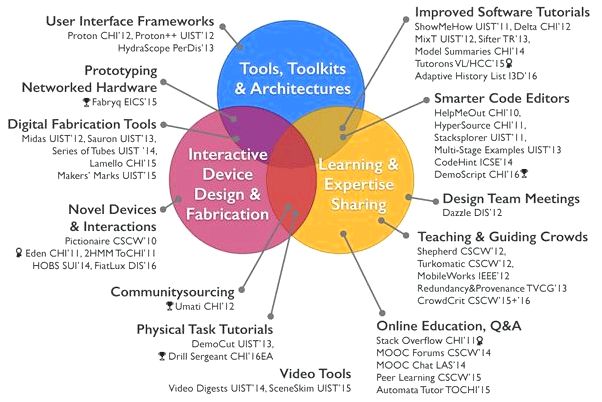
A Persons-Computer Interaction Group in EECS studies interaction in current and future computing environments, spanning workplaces, homes, public spaces, and beyond. The HCI group partcipates in collaborations with scholars and designers across campus, driving research presented at venues for example CHI, UIST, DIS, VIS, and CSCW, and helps to create novel artifacts that cause real-world impact, benefiting finish users past the academic community. Continue reading “Research Area: HCI EECS at UC Berkeley”
Multiple time-scales and the developmental dynamics of social systems

Jessica C. Flack
1Center for Complexity and Collective Computation, Wisconsin Institute for Discovery, Madison, WI 53715, USA
2Santa Fe Institute, Santa Fe, NM 87501, USA
Continue reading “Multiple time-scales and the developmental dynamics of social systems”
Around the Decidability of Reachability in Continuous Time Straight line Time-Invariant Systems – NASA/ADS
Abstract
We think about the decidability of condition-to-condition reachability in straight line time-invariant control systems over continuous time. We analyse this issue with regards to the allowable control sets, that are assumed is the image within straight line map from the unit hypercube. This naturally models bounded (sometimes known as saturated) controls. Decidability from the form of the reachability condition in which control sets are affine subspaces of $mathbb^n$ is really a fundamental lead to control theory. Our first outcome is decidability in 2 dimensions ($n=2$) when the matrix $A$ satisfies some spectral conditions, and conditional decidablility generally. When the transformation matrix $A$ is diagonal with rational records (or rational multiples of the identical algebraic number) then your reachability issue is decidable. When the transformation matrix $A$ has only real eigenvalues, the reachability issue is conditionally decidable. Time-bounded reachability issue is conditionally decidable, and unconditionally decidable in 2 dimensions. A lot of our decidability answers are conditional for the reason that they depend around the decidability of certain mathematical theories, namely the idea from the reals with exponential ($mathfrak_$) with bounded sine ($mathfrak_crime$). We get yourself a hardness result for any mild generalization from the problem in which the target is straightforward set (hypercube of dimension $n-1$ or hyperplane) rather of the point, and also the control set is really a convex bounded polytope. Within this situation, we reveal that the issue is a minimum of as hard because the emph or even the emph.
Human Computer Interface Introduction – Tutorialspoint

Advertisements
Human Computer Interface (HCI) was formerly referred to as man-machine studies or man-machine interaction. It handles the look, execution and assessment laptop or computer systems and related phenomenon which are for human use. Continue reading “Human Computer Interface Introduction – Tutorialspoint”
Discrete Dynamical Systems and Difference Equations with Mathematica

Book Description
Following a work of Yorke and Li in 1975, the idea of discrete dynamical systems and difference equations developed quickly. The applying difference equations also increased quickly, particularly with the development of graphical-interface software that may plot trajectories, calculate Lyapunov exponents, plot bifurcation diagrams, and discover basins of attraction. Continue reading “Discrete Dynamical Systems and Difference Equations with Mathematica”
How illegal social structures help some but harm others

The has outraged millions, getting to light the gaps between your fortunate and fewer fortunate citizens. As being a social researcher who studies societal origins of monetary and health inequalities, it had been obvious in my experience it had become a symbol of deep structural inequalities within the U.S. social hierarchy. Such structural inequalities come in many forms, including wealth and health inequalities.
Continue reading “How illegal social structures help some but harm others”
A resilience engineering method of integrating human and socio-technical system capacities and procedures for commercial infrastructure resilience


Bet on existence game instructions


Advanced Modeling and Simulation in Engineering Sciences

Demand Papers: Data Assimilation in Computational Mechanics – Recent Advances and New Trends
Using experimental data in colaboration with simulation models is becoming anactive research subject. Indeed, new experimental facilities (for example digital image/volume correlation (DIC/DVC)) now enable to gather a sizable and diversified quantity of data, which enables you to identify and validate complex models, in order to enhance predictions produced by simulations tools. In addition, data and models are increasingly more intertwined to enhance understanding in applications coping with structural health monitoring and control for example, with potential real-time dialogue between simulators and connected physical systems (e.g., the DDDAS concept). However, many challenges coping with data filtering, computational cost, or statistical sturdiness have to be addressed to be able to incorporate data efficiently. Continue reading “Advanced Modeling and Simulation in Engineering Sciences”